
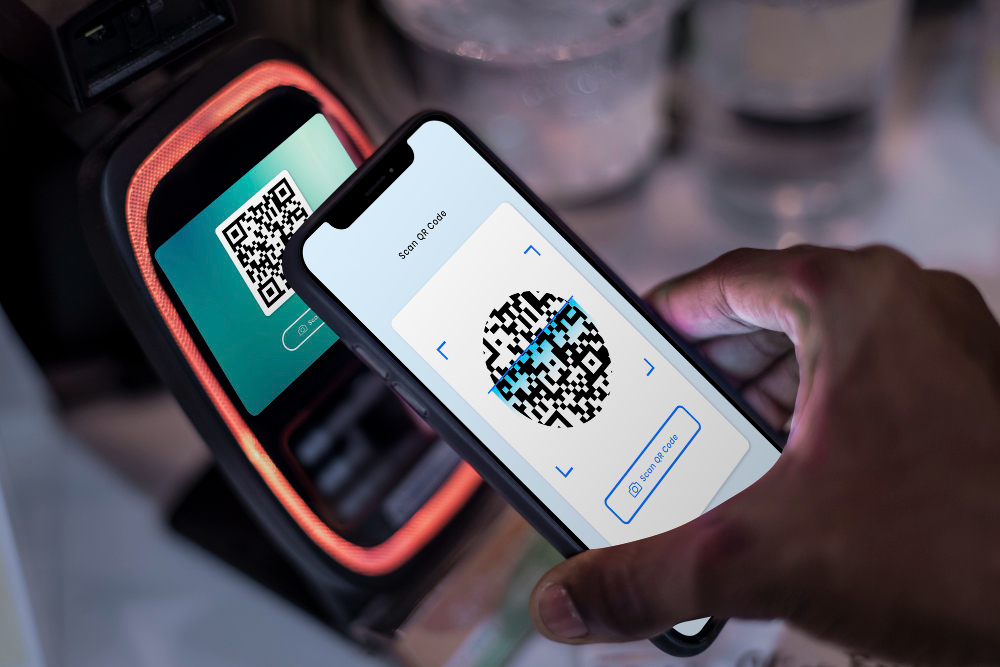
UPI-based expense management uses India’s UPI payment rail to issue, track, and reconcile business spend, instead of relying on physical corporate cards or manual reimbursement. Because UPI is already how most Indian employees pay for everyday purchases, extending it to corporate spend requires no new habit or app. This familiarity, combined with real-time visibility for finance, is why more Indian companies are shifting their expense process onto UPI rails in 2026.
Why Traditional Payment Methods Fall Short for Corporate Spend
Corporate cards and cash advances each come with their own friction for employees and finance alike.
- Corporate cards are hard to distribute at scale. Physical cards require issuance, activation, and replacement logistics across every city.
- Cash advances are difficult to track. Once cash leaves the finance department, visibility drops until reconciliation.
- Reimbursement delays frustrate employees. Employees paying out of pocket wait weeks to see their money returned.
- Card fraud and misuse are hard to catch quickly. Monthly statements often surface issues long after the spend occurred.
- Manual reconciliation slows month-end closing. Finance teams spend disproportionate time matching card statements to receipts.
How UPI-Based Expense Management Solves These Problems
Moving expense management onto UPI rails changes both how funds move and how visible that movement is to finance.
- Issue funds instantly, without physical cards. Platforms like Expensewise send UPI vouchers directly to an employee’s phone, ready to use immediately.
- Track every transaction in real time. Tools like Expensewise show finance exactly when and where a voucher was redeemed, as it happens.
- Cap spend automatically by category. UPI vouchers can be pre-set to a limit, removing the risk of overspending past policy.
- Reduce onboarding friction for new employees. Since employees already use UPI daily, there is no new payment tool to learn.
- Simplify reconciliation with automatic categorisation. Expensewise tags each voucher redemption to its spend category, feeding directly into reporting.
- Extend easily to distributed and field teams. UPI works reliably even for employees in tier-2 cities like Jaipur, Indore, and Nagpur, without needing a physical card network.
- Close the loop with ERP integration. Voucher spend syncs directly into existing accounting systems, removing manual entry at month-end.
Expensewise brings all of this together — instant UPI vouchers, real-time tracking, and automatic ERP-ready reconciliation. Explore Expensewise →
UPI Vouchers vs Corporate Cards vs Cash Advances
| Factor | UPI vouchers | Corporate cards | Cash advances |
|---|---|---|---|
| Issuance speed | Instant, digital | Requires physical distribution | Immediate, but untracked |
| Real-time visibility | Yes | Limited, monthly statements | Very limited |
| Fraud risk | Lower, capped by category | Moderate | Higher |
| Reach in tier-2 cities | Strong, UPI is widely used | Inconsistent card acceptance | Works, but hard to track |
The Bottom Line on UPI-Based Expense Management
UPI-based expense management works because it builds on a payment habit employees already have, rather than introducing a new one. It gives finance real-time visibility that corporate cards and cash advances simply cannot match, especially across a distributed, multi-city workforce. Platforms like Expensewise are built specifically to make this shift smooth, turning UPI into the backbone of corporate spend rather than just a consumer payment method.
Companies are switching because UPI offers instant fund transfer, real-time visibility, and a payment method employees already use daily. This removes the friction of physical corporate cards and the delays associated with reimbursement.
Yes, when managed through a dedicated platform, UPI vouchers are capped by category and limit, and every transaction is tracked in real time. This generally gives finance more visibility than manual reimbursement or unmonitored cash advances.
Yes, UPI has strong reach even in tier-2 cities like Jaipur, Indore, and Nagpur, making it more reliable for distributed teams than physical corporate cards, which depend on merchant card-acceptance infrastructure.
Since every voucher redemption is tracked and categorised automatically, expense data can flow directly into accounting systems. This removes the manual matching of receipts to statements that slows down traditional reconciliation.
For most day-to-day spend categories like travel, meals, and fuel, yes. Some companies keep a card option for edge cases, but UPI vouchers increasingly cover the bulk of routine corporate spend.